Vertical Business Card Mockup: A Practical Guide to Professional Presentation
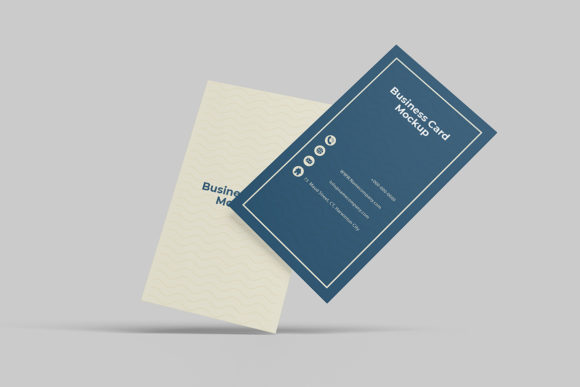
In the competitive landscape of branding and graphic design, the presentation of a final product is often as critical as the design itself. A Vertical Business Card Mockup serves as an essential tool for designers, marketing professionals, and business owners who need to visualize their concepts in a realistic context before production. Unlike flat images or simple 2D previews, this specific format offers a three-dimensional perspective that captures the nuances of texture, lighting, and physical proportions.
When evaluating resources for showcasing designs, the choice between a vertical orientation and other formats depends heavily on the intended use case. This guide explores the distinct advantages of vertical mockups, how they compare to alternative presentation tools, and the practical factors you should consider when integrating them into your workflow.
Understanding the Distinct Value of Vertical Orientation
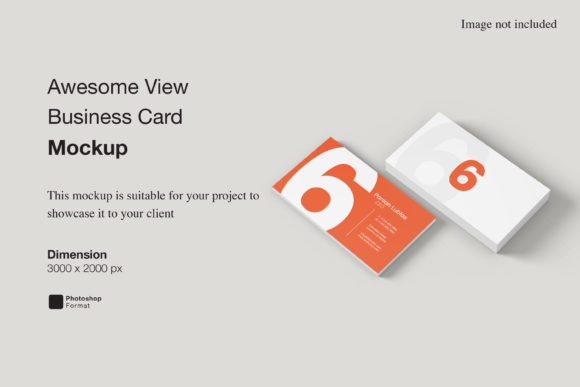
The primary distinction of a Vertical Business Card Mockup lies in its aspect ratio and the resulting visual narrative. While horizontal cards are traditional, the vertical format has gained significant traction in modern branding, particularly for creative industries, tech startups, and lifestyle brands. A mockup designed specifically for this orientation ensures that the layout is viewed exactly as it will appear in the real world.
Standard horizontal mockups can sometimes distort the perception of a vertical design, forcing the viewer to mentally rotate the content. By using a dedicated vertical mockup, you eliminate this cognitive friction. The realistic 3D display allows stakeholders to see how the white space, typography, and color blocking interact within the taller frame. This is crucial for designs where the vertical flow dictates the user's reading pattern.
The realism provided by these tools extends beyond mere dimensions. High-quality vertical mockups simulate the tactile experience of holding a card. They account for edge thickness, corner rounding, and the way light reflects off different finishes like matte, gloss, or spot UV. For a designer, this level of detail is not just aesthetic; it is a functional necessity for securing client approval and minimizing production errors.
Evaluating Workflow Efficiency and Technical Features
One of the most significant considerations when selecting a design resource is the efficiency of the workflow. A high-quality Vertical Business Card Mockup typically comes in PSD (Photoshop) format with integrated smart-object features. This technical specification is what separates professional-grade assets from basic image templates.
Smart objects allow users to replace the current design with their own artwork instantly. Instead of manually resizing, cropping, or warping layers to fit a template, a designer simply double-clicks the smart object layer, pastes their new design, saves the file, and the mockup updates automatically. This process reduces the time required to showcase multiple variations of a single brand identity from hours to seconds.
- Speed: The ability to swap designs within seconds is invaluable during client presentations where immediate feedback is expected.
- Consistency: Smart objects ensure that the lighting, shadows, and perspective remain consistent across all variations, preventing visual dissonance.
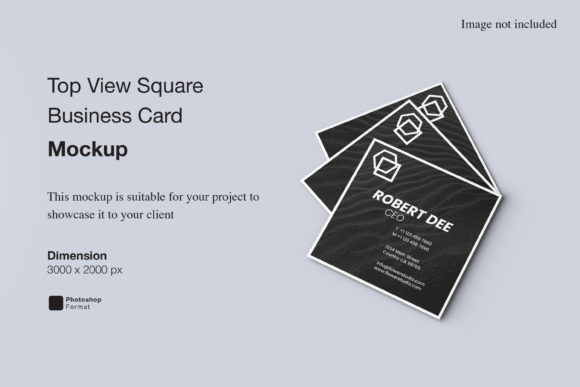
- Resolution: Professional mockups are usually available at 300 dpi with a resolution of 3000x2000 pixels. This ensures that the output is crisp enough for large-scale printing, web portfolios, and high-resolution social media posts without pixelation.
Additionally, the availability of a PDF help guide adds a layer of accessibility. Even for users who may be less familiar with advanced Photoshop techniques, step-by-step instructions ensure that the tool remains user-friendly. This reduces the learning curve and allows teams to focus on creativity rather than troubleshooting software mechanics.
Comparing Vertical Mockups with Alternative Formats
When deciding on the best tool for your project, it is helpful to compare vertical mockups against other common options. The decision often hinges on the specific goals of the presentation and the nature of the design.
Vertical vs. Horizontal Mockups
The most direct comparison is between vertical and horizontal orientations. If your brand identity strictly adheres to a landscape format, a horizontal mockup is the logical choice. However, if you are designing a vertical card, using a horizontal mockup requires digital manipulation that can compromise accuracy. Conversely, a vertical mockup tailored for a horizontal card would result in excessive empty space or awkward cropping. The key factor here is alignment: the mockup must match the physical dimensions of the final product to convey an accurate representation.
Static Images vs. Interactive 3D Models
Beyond orientation, there is a distinction between static PSD mockups and fully interactive 3D models found in specialized rendering software. Static mockups, such as the vertical business card version discussed here, are highly efficient for quick iterations and standard portfolio displays. They require no complex rendering engines and can be processed locally on a standard workstation.
Interactive 3D models offer more flexibility, allowing users to rotate the camera angle and adjust lighting dynamically. While powerful, these often come with a steeper learning curve and higher system requirements. For most graphic designers and small business owners, the balance of realism and ease-of-use provided by a PSD-based vertical mockup makes it the superior choice. It offers 90% of the visual fidelity needed for client buy-in without the overhead of complex 3D modeling.
Free Templates vs. Premium Resources
Another tradeoff involves the quality of the asset. Free resources are abundant, but they often lack the resolution, lighting precision, or smart-object functionality of premium options. A low-resolution free mockup might look acceptable on a mobile screen but will fail when projected on a large monitor or printed. Premium vertical mockups typically include customizable background colors and textures, allowing for better integration with various brand palettes. The investment in a high-quality resource often pays off in the professionalism of the final presentation.
Identifying Strengths and Limitations
Like any tool, a Vertical Business Card Mockup has specific strengths and limitations that influence its suitability for different scenarios. Understanding these factors helps in making an informed decision.
Strengths:
- Realistic Context: It bridges the gap between digital files and physical reality, helping clients understand the scale and feel of the card.
- Versatility: With changeable background-color options, the same mockup can be used for corporate, minimalist, or vibrant creative designs.
- Professionalism: Presenting a design in a realistic 3D display significantly elevates the perceived value of the work.
Limitations:
- Software Dependency: Most high-quality vertical mockups require Adobe Photoshop. Users without access to this software cannot utilize the smart-object features effectively.
- Fixed Perspective: Unlike full 3D scenes, the camera angle in a PSD mockup is generally fixed. You cannot rotate the view to see the back of the card unless the template specifically includes a separate layer for that.
- Asset Restrictions: Photos used in preview images are often for illustration purposes only. Designers must be careful not to assume that the background elements included in the download are licensed for commercial use if they intend to publish the image widely.
Strategic Use Cases and Decision Factors
Determining when to use a vertical mockup versus another option requires analyzing the audience and the stage of the project. These tools are particularly effective during the proposal phase. When pitching a new brand identity to a potential client, showing a flat JPEG can feel abstract. Presenting a Vertical Business Card Mockup helps the client visualize the tangible outcome, increasing the likelihood of approval.
They are also ideal for portfolio websites. Recruiters and clients often scan portfolios quickly. A well-rendered vertical mockup stands out against a sea of flat screenshots, demonstrating attention to detail and a commitment to quality. Furthermore, for social media marketing, these high-resolution images serve as engaging content that showcases the brand's aesthetic in a polished manner.
However, there are situations where a vertical mockup might not be the right choice. If the project involves a multi-page brochure or a large-format poster, a business card mockup is irrelevant. Similarly, if the design team is working in a non-Adobe environment, such as Canva or Figma, they may need to export their designs and find a compatible format that does not rely on complex smart-object workflows. In such cases, simpler image overlays or generic 3D viewers might be more practical.
Making the Final Choice
The decision to invest in a Vertical Business Card Mockup ultimately comes down to the need for realism, efficiency, and professional presentation. For designers seeking to elevate their work and communicate their vision clearly, the benefits of using a high-quality, smart-object-enabled PSD template are substantial.
By providing a realistic 3D display, these mockups reduce ambiguity and streamline the approval process. The ability to easily replace designs, combined with high-resolution outputs and customizable backgrounds, makes them a versatile asset for a wide range of projects. While they require specific software and an understanding of their limitations, the return on investment in terms of time saved and professional credibility gained is significant.
Whether you are a freelancer building a portfolio or an agency managing a major rebrand, ensuring your designs are presented in the correct orientation and format is a critical step. Choosing a vertical mockup that aligns with your specific design needs ensures that your work is judged on its merits, not on poor presentation.