Minimal Frame Mockup for Professional Design Displays
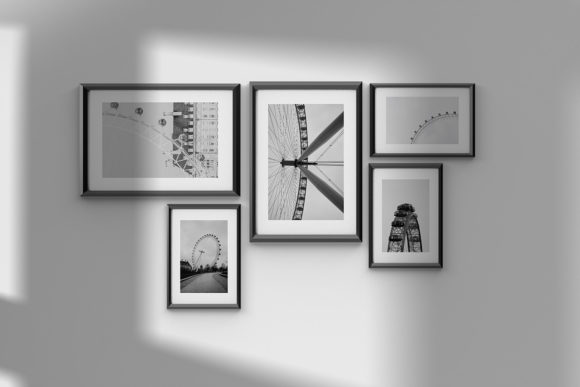
In the competitive world of visual communication, the difference between a good design and a great presentation often lies in context. A logo might look perfect on a white canvas, but does it stand out when placed against a realistic wall? Does your app interface feel tangible when viewed on a screen that mimics real-world lighting? This is where the Minimal Frame Mockup becomes an essential tool for creators who need to bridge the gap between digital files and physical perception. It transforms flat images into immersive 3D displays, allowing you to showcase your work with a level of realism that static screenshots simply cannot achieve.
Why Realistic Context Matters for Your Work
When stakeholders, clients, or potential customers view your portfolio, they are not just looking at pixels; they are trying to visualize how your design functions in the real world. A minimalist frame serves as a neutral yet sophisticated stage. By presenting your artwork within a realistic 3D environment, you provide immediate context. This helps viewers understand scale, texture, and placement without needing a verbal explanation. For professionals like marketers and small business owners, this clarity can streamline decision-making processes. Instead of guessing how a poster will look in a lobby, you present a high-fidelity representation that answers those questions before they are even asked.
The ability to present designs professionally is not merely about aesthetics; it is about credibility. When you use a tool designed to offer a realistic 3D display, you signal attention to detail and a commitment to quality. This subtle psychological cue can strengthen trust with your audience. Whether you are pitching a rebranding project to a startup founder or showcasing educational materials to a school board, the presentation carries as much weight as the content itself. The Minimal Frame Mockup ensures that your message is delivered through a medium that feels polished and intentional.
Simplifying the Workflow with Smart-Object Technology
One of the most significant barriers to creating high-quality mockups has traditionally been technical complexity. Many designers avoid using advanced rendering tools because they require hours of manual adjustment. However, this specific resource eliminates that friction by leveraging the power of Photoshop's smart-object features. Available in the widely used PSD format, the file allows you to replace current designs with your own within seconds. You do not need to be a graphic wizard to achieve professional results.
The workflow is intuitive: open the file, locate the designated smart object layer, double-click to edit your design, save, and watch the mockup update instantly. This efficiency is crucial for freelancers and agencies managing tight deadlines. Imagine having a client request a last-minute change to a color scheme or layout. With standard image editing, you might spend an hour adjusting shadows, perspective, and lighting. With this mockup, the entire process takes minutes. This time-saving capability allows you to focus more on the creative strategy and less on the mechanical execution of the presentation.
- Rapid Iteration: Test multiple design variations quickly to see which resonates best with your target audience.
- Error Reduction: Automated alignment prevents common mistakes like skewed perspectives or mismatched lighting.
- Consistency: Ensure every asset in your portfolio maintains the same high standard of presentation.
Customization for Diverse Presentation Needs
While the frame itself offers a clean, minimal aesthetic, the flexibility extends beyond just swapping out the central image. The inclusion of a changeable background-color feature adds another layer of utility. Different projects require different atmospheres. A bold, vibrant background might suit a youth-oriented campaign, while a soft, neutral tone might be better for a corporate annual report. Being able to adjust these elements without starting from scratch gives you control over the mood of your presentation.
This adaptability is particularly valuable for educators and bloggers who need to create consistent visual assets across various platforms. You can generate a series of images for a blog post, ensuring they all share a cohesive look while highlighting different points. Similarly, publishers can use this to preview book covers or magazine layouts in a way that feels authentic. The ability to tweak the environment around your design allows you to tailor the narrative, making the final output feel bespoke rather than generic.
Technical Specifications and Practical Application
For those concerned with print quality or high-resolution web usage, the technical specifications of this mockup are robust. The file supports a resolution of 3000x2000 px at 300 dpi. This density ensures that when you export your final image, it remains crisp and clear, whether displayed on a large monitor or printed for a physical handout. High fidelity is non-negotiable for professionals who want their work to hold up under scrutiny. Blurry edges or pixelated text can undermine the authority of your design, regardless of how creative the concept is.
To assist users who may be new to the software, a PDF help guide is included. This documentation provides step-by-step instructions, ensuring that even hobbyists or those less familiar with advanced Photoshop features can utilize the tool effectively. The goal is accessibility; the technology should serve the creator, not hinder them. By removing the learning curve, the mockup empowers a wider range of individuals to produce professional-grade visuals.
It is important to note that the photos used in any preview images are for illustration purposes only and are not included with the purchase. This distinction is vital for understanding what you are acquiring. You are buying a versatile template, not a pre-made photograph. This means you have the freedom to insert your unique intellectual property without worrying about licensing conflicts or stock photo limitations. The mockup is a vessel for your creativity, waiting to be filled with your original concepts.
Who Benefits Most from This Tool?
The utility of the Minimal Frame Mockup spans a broad spectrum of users. For entrepreneurs and small business owners, it offers a cost-effective way to market products without hiring expensive photographers for every single item launch. Marketers can rapidly A/B test different visual approaches to determine which drives higher engagement. Freelancers can enhance their portfolios, demonstrating versatility and professionalism to attract higher-paying clients.
Even hobbyists and consumers can find value here. Perhaps you have created a custom invitation for a family event or a piece of fan art you wish to display. This tool allows you to present your personal projects with the same polish as commercial work. It validates your efforts and helps you share your creations in a way that commands respect.
Making Informed Choices
While this resource offers significant advantages, it is not a universal solution for every scenario. If your project requires complex environmental interactions, such as a frame hanging in a bustling street scene with dynamic weather effects, a simple background color swap might not suffice. In such cases, users should compare options and consider more specialized 3D rendering software. Additionally, success depends on the quality of the source design. A mockup can enhance a strong design, but it cannot fix fundamental flaws in composition or color theory.
Ultimately, the Minimal Frame Mockup is a strategic asset for anyone serious about visual storytelling. It bridges the gap between imagination and reality, providing a practical, efficient, and professional method to showcase your work. By adopting tools that prioritize ease of use and high-quality output, you align yourself with industry standards, ensuring that your ideas are seen exactly as you intended them to be.